The 2020 electrical safety regulations, their 2025 extension to social housing, HMO licensing in Milton Keynes, Northampton, Bedford and Buckinghamshire, and what's actually required for appliances and alarms.
Landlord electrical safety rules
Everything a landlord in England needs to know about electrical safety in 2026, in one place.
The core duty: an EICR every five years
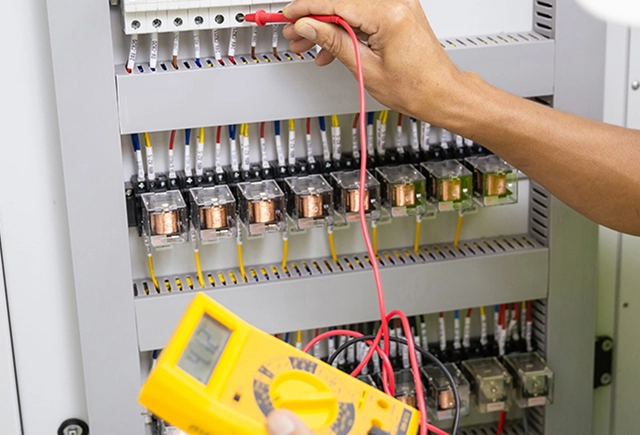
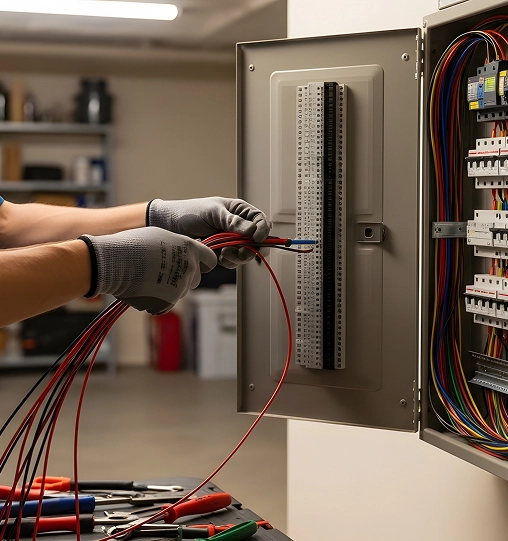
The Electrical Safety Standards in the Private Rented Sector (England) Regulations 2020 require landlords to make sure the electrical installation in a rented home is inspected and tested by a qualified and competent person at least every five years, and to meet the national standards set out in BS 7671. They have applied to new tenancies since 1 July 2020 and to all existing tenancies since 1 April 2021.
The evidence is an Electrical Installation Condition Report (EICR). If the inspector recommends a shorter interval, that date applies instead of five years.
Deadlines you have to meet
| Who | What | When |
|---|---|---|
| Existing tenants | Copy of the report | Within 28 days of the inspection |
| New tenants | Copy of the latest report | Before they occupy |
| Prospective tenants | Copy of the report | Within 28 days of a written request |
| Local council | Copy of the report | Within 7 days of a written request |
| You | Remedial work or further investigation | Within 28 days, or sooner if the report says so |
| Tenant and council | Written confirmation that the work is complete | Within 28 days of completion |
Councils can impose financial penalties of up to £30,000 for breaches, and can arrange the remedial work themselves and recover the cost.
Social housing: the 2025 extension
Regulations made in September 2025 extended the same duties to the social rented sector, so registered providers of social housing must also have installations inspected at least every five years, give tenants copies of reports and complete remedial work within 28 days. For tenancies that already existed before 1 December 2025, the first inspection had to be completed by 1 November 2026. Social landlords must also check electrical appliances they supply.
New builds and new installations
If the property was newly built or fully rewired, the Electrical Installation Certificate (EIC) can stand in for an EICR until five years after its date. After that you need an EICR. Keep the EIC with your compliance documents. See our guide to electrical certificates.
HMO licensing in our area
Shared houses face extra requirements through licensing. Councils' licence conditions typically ask for a current EICR, records for supplied appliances and evidence that fire alarms and emergency lighting are maintained.
- Milton Keynes City Council operates mandatory HMO licensing and updated its HMO licensing policy in 2025.
- West Northamptonshire Council runs an additional HMO licensing scheme from February 2025 to 2030, extending licensing to smaller HMOs of three or four occupiers in designated areas of Northampton and Daventry.
- Bedford Borough Council runs additional licensing across the whole borough until May 2028.
- Buckinghamshire Council operates mandatory HMO licensing for larger HMOs, including in Buckingham.
Schemes change, so always check the council's current pages for your property. Since BS 7671 Amendment 2, new socket circuits in HMOs also need arc fault detection devices (AFDDs), which affects the cost of a consumer unit upgrade.
Appliances and PAT testing
The 2020 regulations cover the fixed installation, not appliances. But landlords have a general duty to make sure appliances they supply are safe, many HMO licences ask for records, and the social housing regulations include an equipment check. In practice, PAT testing supplied appliances at each change of tenancy, or yearly in HMOs, is the simplest way to show you've done it.
Smoke and carbon monoxide alarms
The Smoke and Carbon Monoxide Alarm (Amendment) Regulations 2022 require a smoke alarm on every storey used as living accommodation, and a carbon monoxide alarm in every room with a fixed combustion appliance (other than a gas cooker). Alarms must be working at the start of each tenancy and repaired or replaced once reported faulty. See smoke and CO alarm installation.
A simple compliance routine
- Book the EICR at least a month before the current one expires.
- Give the tenant a copy within 28 days, and keep proof you sent it.
- If it's unsatisfactory, get the remedial work done within 28 days and send written confirmation to the tenant and council.
- Test supplied appliances and alarms at each change of tenancy.
- Keep every report and certificate together, and diary the next date.
Questions people ask
Do lodgers count?


What if my tenant refuses access?
Do C3 items have to be fixed within 28 days?
Landlords
Need your EICR done?
We handle the inspection, the tenant access and the repairs, across Milton Keynes, Northampton, Bedford and Buckingham.
Keep reading