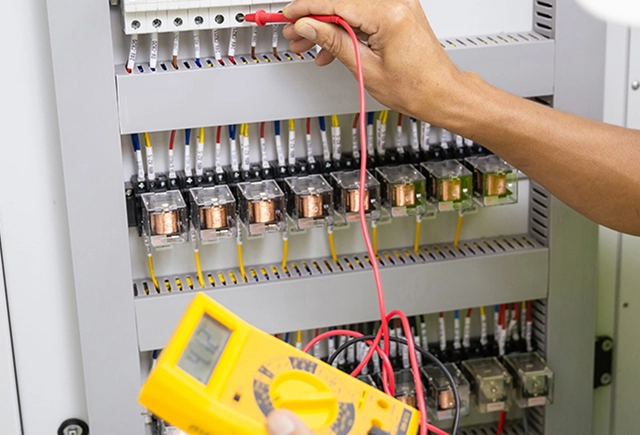
The Electricity at Work Regulations 1989 require every employer to maintain electrical systems so that they don't cause danger. The usual way to prove you've done that is a periodic inspection, a commercial EICR, often called fixed wire testing. Insurers, landlords, licensing officers and fire risk assessors all ask to see one.
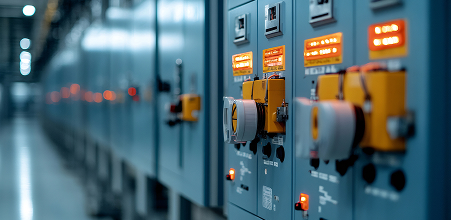
Commercial installations are different from houses: several distribution boards, three-phase supplies, kitchens full of high-load equipment, emergency lighting and plant that can't simply be switched off. We plan the work around that, testing board by board and out of hours where it keeps you trading.
Premises we work in
- Restaurants, takeaways and commercial kitchens
- Shops, salons and barbers
- Offices and serviced workspaces
- Pubs, cafés and small hotels
- Warehouses, workshops and light industrial units
- Churches, community halls and sports clubs
- Blocks of flats (landlord's supply and communal areas)
The IET recommends a maximum of five years between inspections for most commercial premises, and three years for industrial units and places of public entertainment. Your insurer may ask for more frequent inspections.
Multiple boards and sampling
A typical restaurant might have a main panel, a three-phase kitchen board, a bar board and separate supplies for extraction and refrigeration. Each board gets its own schedule of circuits and test results, so the report is something you can maintain against, not just a pass or fail.
On large sites the inspection can be done on a sample of circuits and accessories, agreed in advance and written into the Extent and limitations section. We agree the sample with you before we start and say plainly what wasn't covered. A report that quietly covered only a quarter of a building isn't much use to you, your insurer or the next electrician.
Keeping you trading
Most of a commercial EICR involves circuits being switched off. To keep disruption down we:
- test before opening, after closing or on your quietest day;
- agree which circuits must stay live: refrigeration, tills, servers, security;
- work through the building in sections so staff can keep working;
- label circuits as we go, because an accurate circuit chart saves time in every future breakdown.
Commercial kitchens
Kitchens are hard on electrics: heat, grease, steam, and cleaning with plenty of water. The usual findings are damaged flexes to fryers and bains-marie, isolators that no longer isolate, missing RCD protection for socket outlets, and supplementary bonding that has corroded. We check that every piece of fixed equipment can be isolated locally, and we note anything that could leave staff unable to switch off in an emergency.
Emergency lighting and PAT on the same visit
Emergency lighting needs its own testing regime: a monthly functional check and an annual full-duration test under BS 5266. Portable equipment needs PAT testing. If you'd like these done alongside the EICR, we'll plan it so the extra time is small, and you get one set of records for your fire risk assessment and insurer.